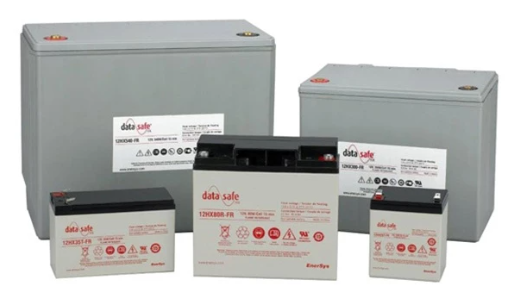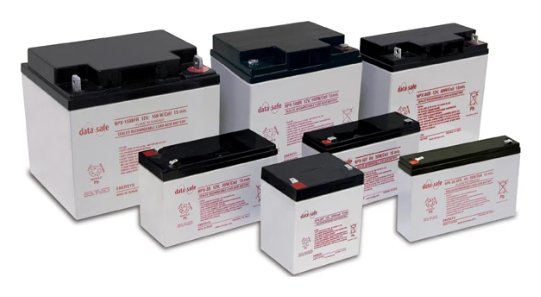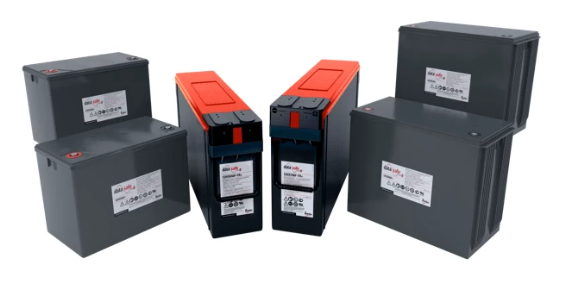

EnerSys® DataSafe® HX+ is a 12V front and top terminal UPS battery built with Thin Plate Pure Lead (TPPL) technology for data centers and mission-critical backup power. It combines high-rate power density, a 12+ year design life at 20°C and low float energy consumption, which lowers the total cost of ownership of a data center UPS battery system. KPS supplies, sizes, installs and supports DataSafe HX+ batteries across Egypt.
- Wide Wpc range of front and top terminal monoblocs
- Specifically designed for high-rate discharge applications
- Excellent power density
- Long design life: 12+ years at 20oC
- Low energy consumption
- Low total cost of ownership
Key specifications
| Specification | Value |
|---|---|
| Technology | Thin Plate Pure Lead (TPPL), VRLA AGM |
| Nominal voltage | 12V monobloc |
| Power range | 360–660 Wpc (15 min to 1.67 Vpc, 25°C) |
| Terminal configuration | Front and top terminal monoblocs (wide Wpc range) |
| Discharge | Designed for high-rate discharge applications |
| Power density | Excellent |
| Design life | 12+ years at 20°C |
| Energy consumption | Low |
| Total cost of ownership | Low |
What is TPPL technology?
Thin Plate Pure Lead (TPPL) batteries use very thin plates made from high-purity lead instead of conventional lead-calcium alloys. Thinner plates give more plate surface area, so a TPPL battery delivers more power in the short, high-rate discharges a UPS needs. High-purity lead also corrodes more slowly, which supports the 12+ year design life. Learn more about our TPPL batteries in Egypt.
VRLA AGM construction
DataSafe HX+ is a valve-regulated lead-acid (VRLA) battery with absorbed glass mat (AGM) separators. The electrolyte is held in the glass mat, so the battery is sealed, maintenance-free and needs no water addition, and it can be installed in battery cabinets and racks next to UPS equipment. Compare it with other VRLA AGM lead-acid batteries.
12+ year design life
EnerSys rates DataSafe HX+ for a design life of 12+ years at 20°C. Actual service life depends on temperature, float voltage and cycling, so KPS recommends a controlled battery room and battery monitoring for data center installations.
Data center and UPS battery solution
DataSafe HX+ is designed for the short runtimes of modern data center UPS systems, typically 5 to 15 minutes until generators take over. With power from 360 to 660 Wpc in front and top terminal formats, it fits high-density UPS battery cabinets for data centers, telecom hubs, banks, hospitals and industrial UPS. See the full EnerSys DataSafe battery range.
Applications
- Uninterruptible Power Supply (UPS) systems
- Data center power back-up
- Mission-critical power back-up applications
- High-rate discharge applications
FAQs
What is the DataSafe® HX+ battery used for?
DataSafe® HX+ batteries are designed for mission-critical power back-up in Uninterruptible Power Supply (UPS) systems, including data centers looking for energy-efficient power management.
How do I request a quote for DataSafe® HX+ batteries?
Click the Request a Quote button on this page or message KPS on WhatsApp at +201002009231. Include the voltage, capacity and runtime you need.
Does KPS support DataSafe® HX+ installations?
Yes. KPS supplies DataSafe® HX+ batteries and provides installation, commissioning and after-sales support.
What is a TPPL battery?
A TPPL (Thin Plate Pure Lead) battery uses thin plates of high-purity lead. This gives high power density for UPS discharges, low self-discharge and a long design life. DataSafe HX+ uses TPPL technology.
Is DataSafe HX+ a VRLA AGM battery?
Yes. DataSafe HX+ is a sealed valve-regulated lead-acid (VRLA) battery with absorbed glass mat (AGM) separators, combined with TPPL plate technology.
How long does a DataSafe HX+ battery last?
EnerSys specifies a design life of 12+ years at 20°C. Service life depends on operating temperature, charging and cycling.
Is DataSafe HX+ suitable for data center UPS?
Yes. DataSafe HX+ is designed for high-rate discharge in UPS systems and data center power backup, with 360–660 Wpc in 12V front and top terminal monoblocs.